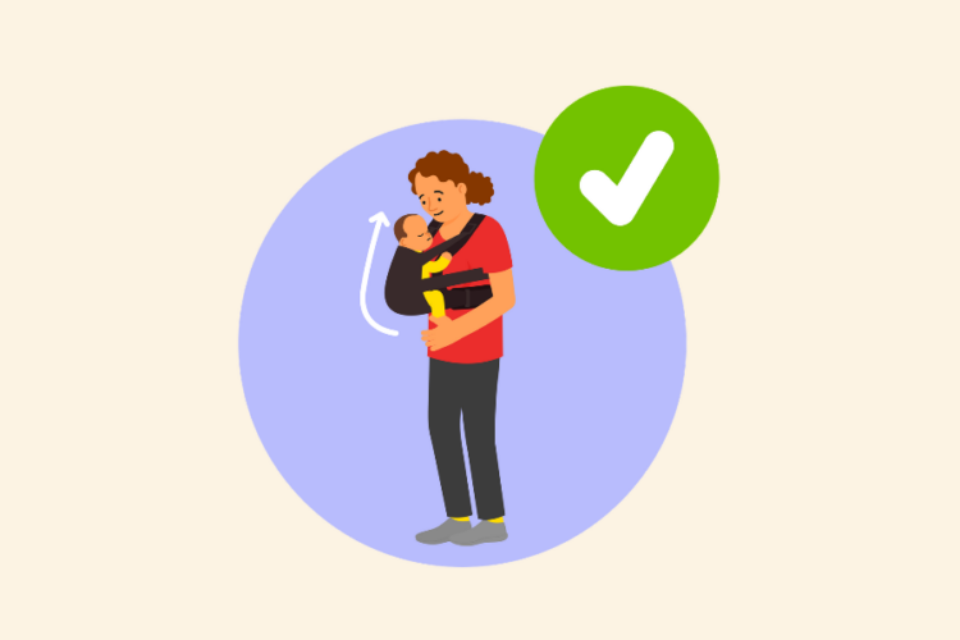
High
Your baby should be high on the firm part of your chest. You should be able to kiss their head easily.

When you use a sling or carrier, make sure your baby is upright and can breathe easily.
Keep your baby high, in-sight and tightened just right.
Your baby should be high on the firm part of your chest. You should be able to kiss their head easily.
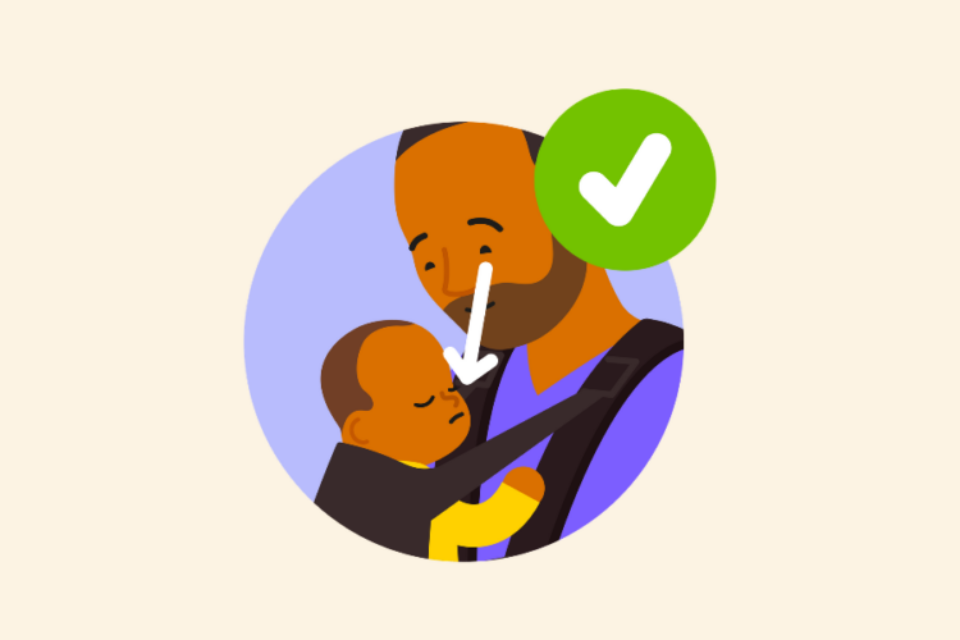
Your baby should be upright, with their mouth and nose in-sight. Their mouth and nose should be clear so they can breathe easily (a clear airway).
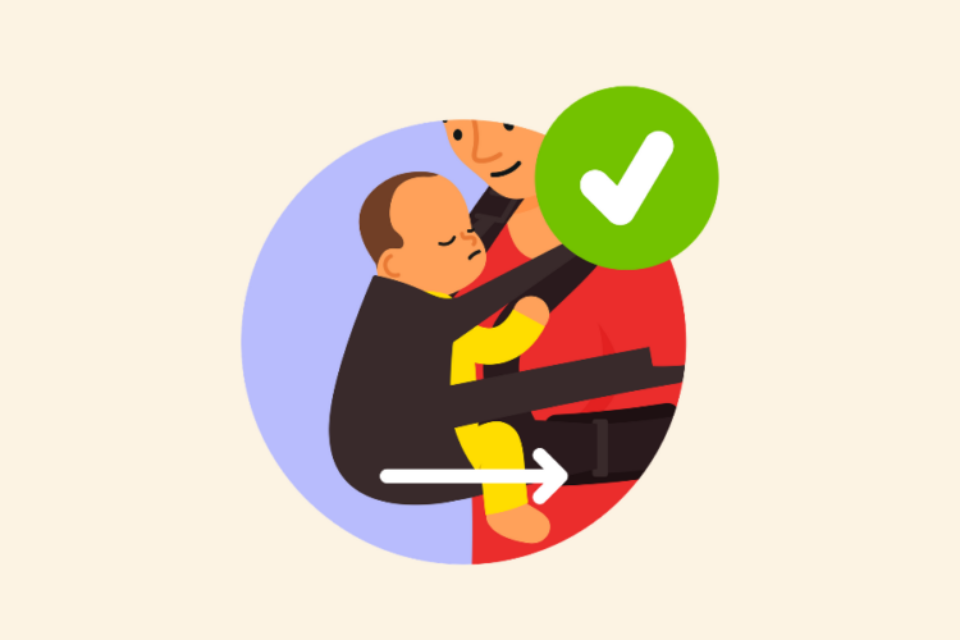
The sling or carrier should hold your baby tight against you. Their back should be evenly supported, with nothing pushing behind their head.
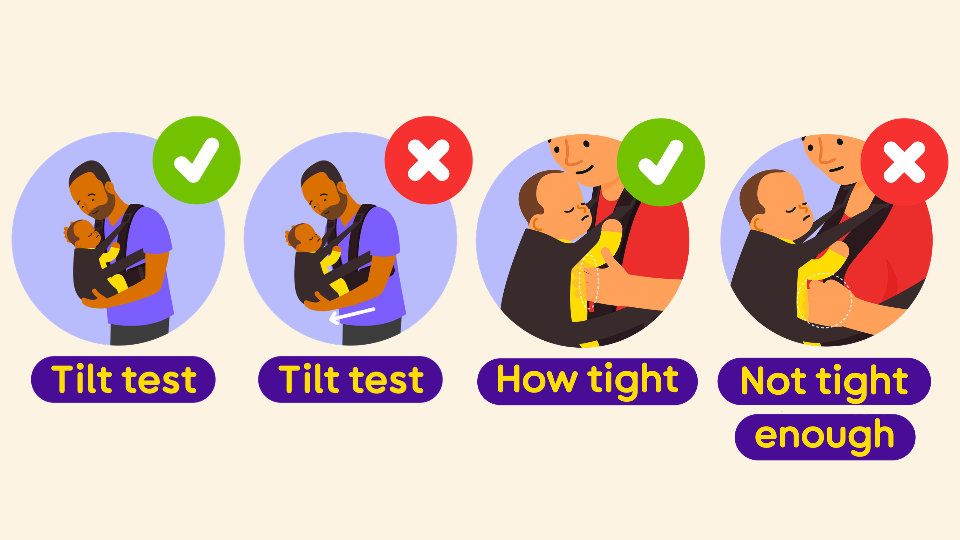
Your baby should be held tight against you, to ensure they don’t slump down.
Check that if you were to lean slightly forward, supporting your baby’s head, their body stays tight against yours.
The carrier isn’t too tight if you can fit your fingers between the firm part of your chest and your baby’s chest.
Always check your baby is high, in-sight and tightened just right when you are using your sling or carrier and reposition them if needed.
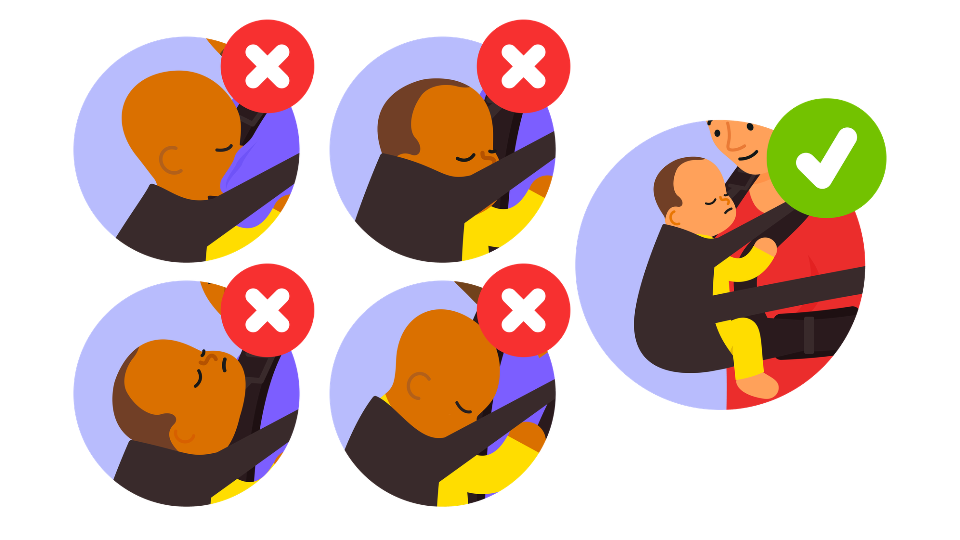
Keep making sure:
Young, premature and low birthweight babies have heavy heads and weak necks. This makes their airway (ability to breathe) more at risk in slings and carriers.
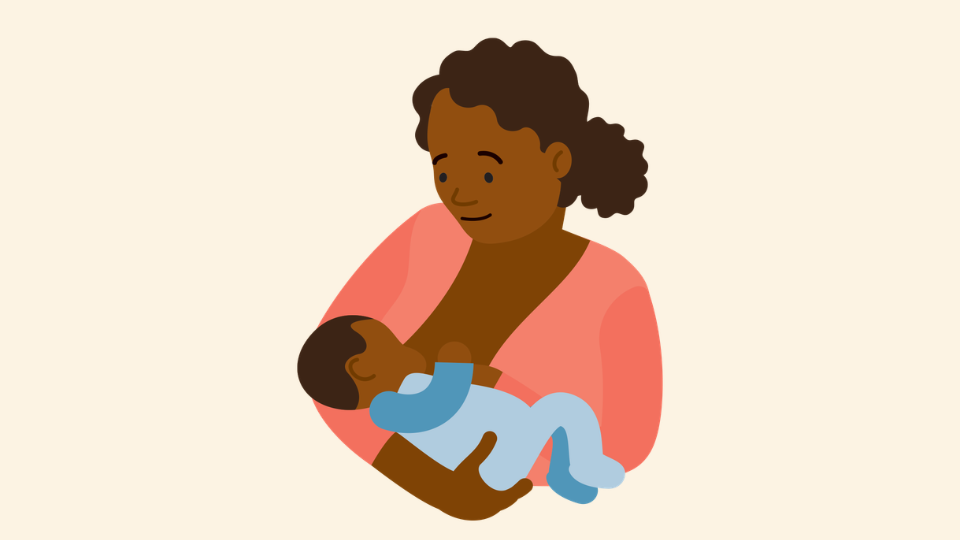
It is safest to take your baby out of the sling or carrier for feeding.
If you do feed your baby in a sling or carrier:
After feeding, put your baby back in the high, in-sight and tightened just right position. Do not let them sleep in the sling or carrier in the same position they were feeding in.

Dress your baby in light layers.
Check if your baby is too hot by feeling their chest or the back of their neck.
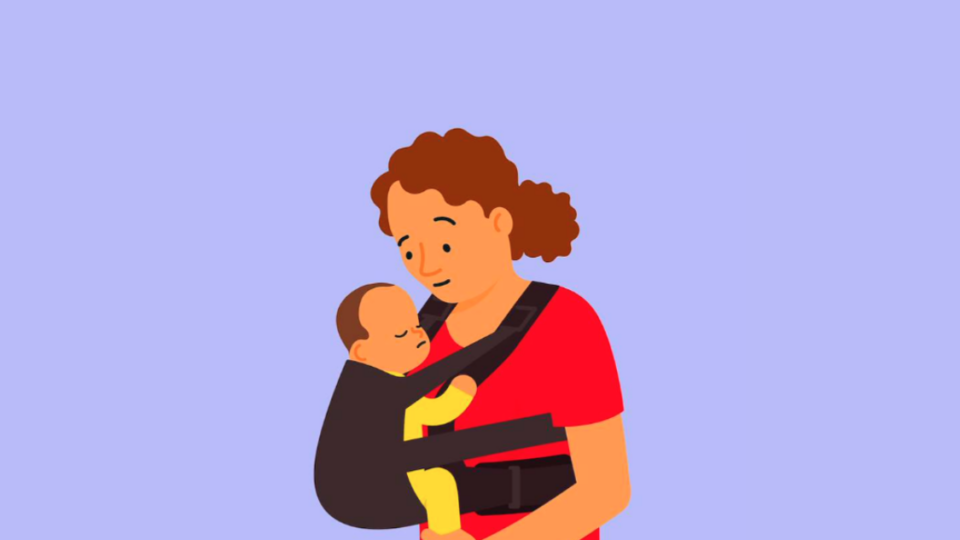
If your baby falls asleep, make sure they are still high, in-sight and tightened just right.
If you have drunk alcohol, or taken drugs or medicines that make you sleepy, don’t use a sling or baby carrier.
Check the sling or carrier maker’s instructions for more information.
Research has shown that there are many benefits to using a sling or carrier:
Research has also shown that parents and carers find slings and carriers useful for ease of movement, bonding with and soothing their baby; being able to use their hands for other tasks and having the option for shared care.
The Lullaby Trust would like to thank the following contributors to this project, in alphabetical order:
The Baby Carrier Industry Alliance, Babywearing Education Network, The Breastfeeding Network, The British Retail Consortium, The Child Accident Prevention Trust, Carrying Matters, Department of Health and Social Care, Durham Infancy and Sleep Centre at Durham University, Kid Rapt Ltd, La Leche League GB, NCT (National Childbirth Trust), Office for Product Safety and Standards, The Royal Society for the Prevention of Accidents, Teddy’s Wish, Chartered Trading Standards Institute, UNICEF Baby Friendly Initiative, Wear My Baby and Which?
We would also like to thank the family of baby James ‘ Jimmy’ Alderman.