Bereavement training
Our training packages cover bereavement communication, how to support anyone affected by the death of a baby or young child, as well as understanding grief in a cultural context.
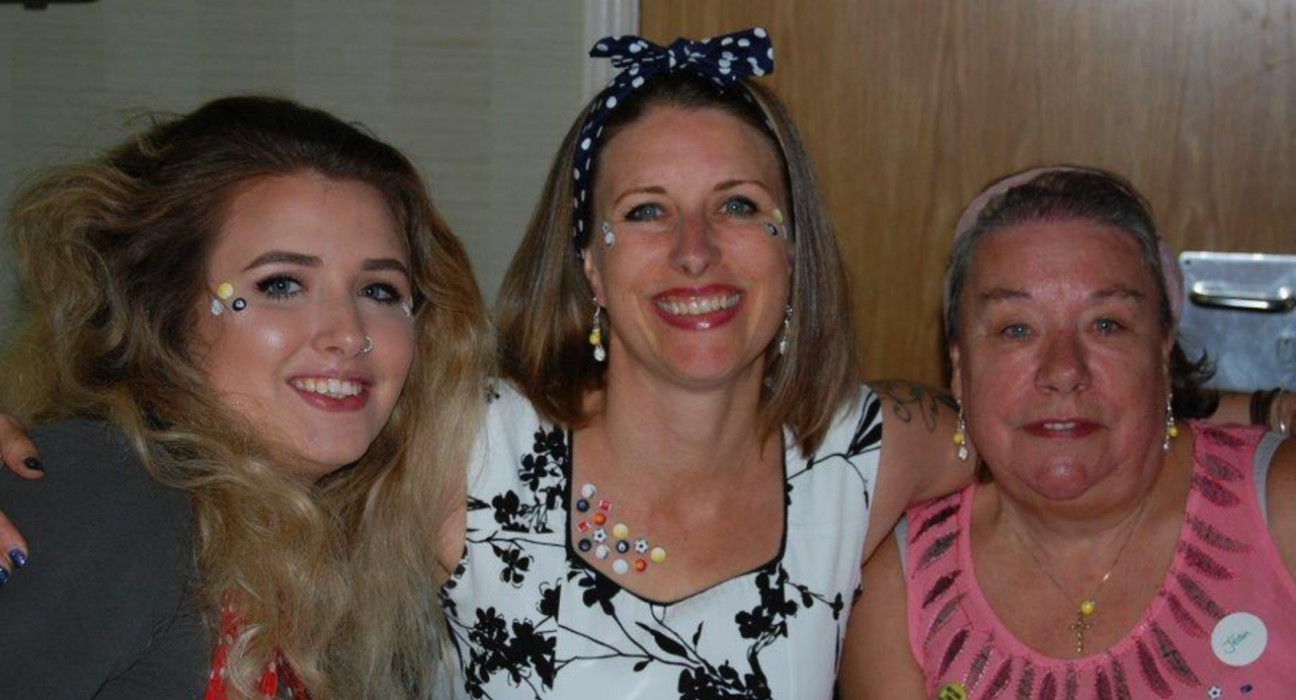
I live in Wheathampstead and have been here for 25 years. I was born in Tottenham, but we moved to Hemel Hempstead when I was about five years old as part of the London overspill. My partner, Mick, had a job that led us to move around a bit. As well as my little’un, Paul, who died as a baby, I have three children; Katrina, Mark and Ian. Katrina’s talking me into moving to near her in North Wales!

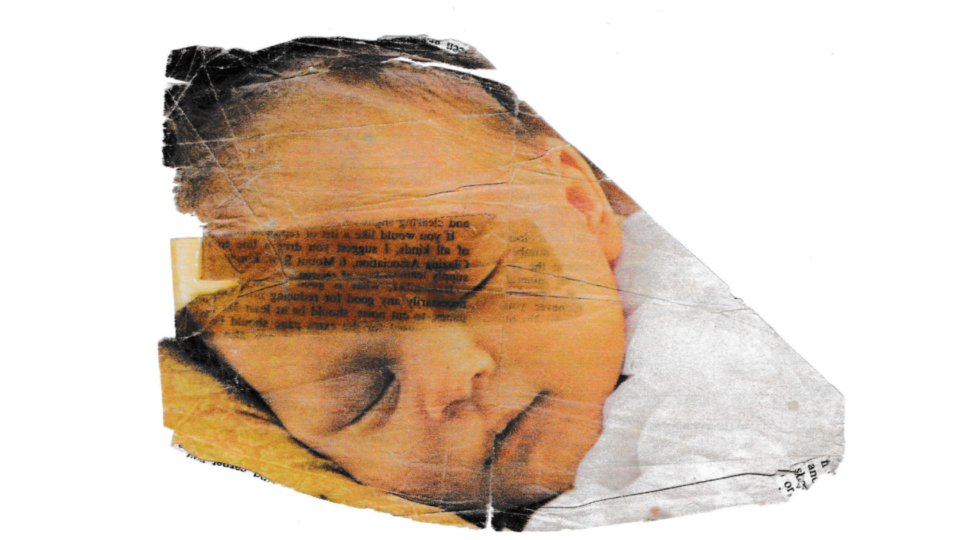
Paul was born on 15th November 1973 in St Pauls Hospital at seven pounds. He had jaundice, but was otherwise healthy.
Mick was late getting the Christmas tree that year. I remember he bought it home late afternoon the day before Christmas eve 1973. He put all the decorations on the tree, and I was sat in a white leather swivel chair feeding Paul. Mick turned the lights on and Paul’s eyes just lit up. He stopped feeding and turned his head. It was amazing and such a special moment. I’ll always remember that white chair. Paul died early the following morning.
After we lost him, I was searching my mind as to why it happened – I found myself desperately looking for answers. This is what prompted me to write to the Foundation for the Study of Infant Deaths (FSID), which is what The Lullaby Trust was called at the time. I wrote to Professor Emery to try and understand if SIDS and jaundice were linked, to find answers. But he wrote back to say it had nothing to do with it. I just needed a reason. So did Mick.
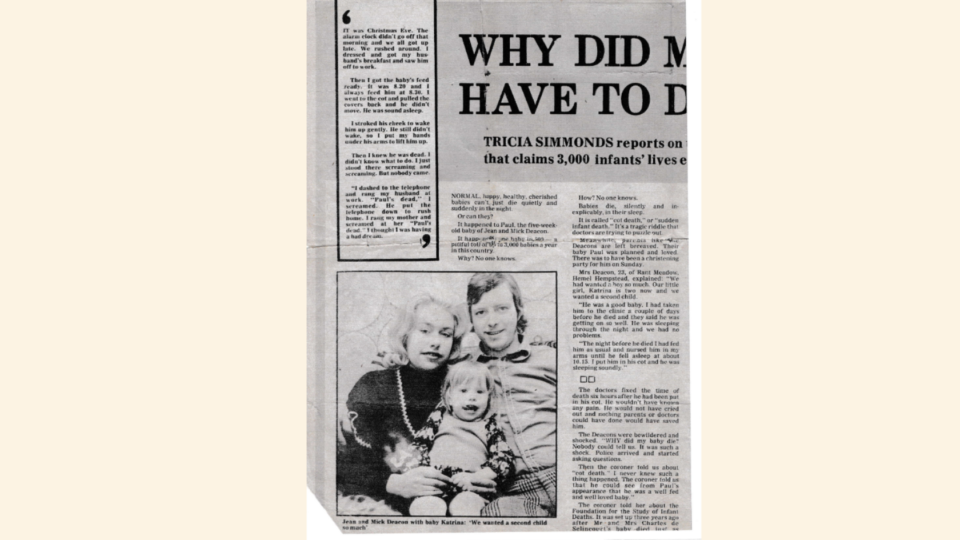
Mick took Paul’s death very badly. Mick smoked at the time, but never smoked in the same room as Paul. He blamed himself for Paul’s death, and like me, was desperate for an answer. We both took Paul’s death awfully and ultimately, it led to strains on our relationship. Early in 1976, Mick left.
In the period following Paul’s death, the coroner was actually one of my biggest supports. I used to go there a couple of times a week – I probably drove him mad! This went on for a few years. They’re supposed to keep the paperwork for a short time, but he kept mine longer because he knew I kept coming back to read it and ask questions. I was worried I’d missed something. He was lovely.
It’s the loss without a reason that’s so difficult for me. I’ll never be able to fully rest again. I’m absolutely terrified of losing another child or a grandchild. There’s just a constant fear and anxiety. When the mattress alarms/monitors came out, I cried. They are incredible for giving parents peace of mind. The fear works its way down the family too. When Katrina had her children, she’d sleep with her hand on her daughter’s belly to check she was breathing. The effects of the loss of a baby are so wide-reaching.
I remember doing something similar when I had Mark in 1975. I sat in a rocking chair next to his cot for six weeks. I didn’t sleep in my bed that whole time. I just kept poking and prodding Mark!
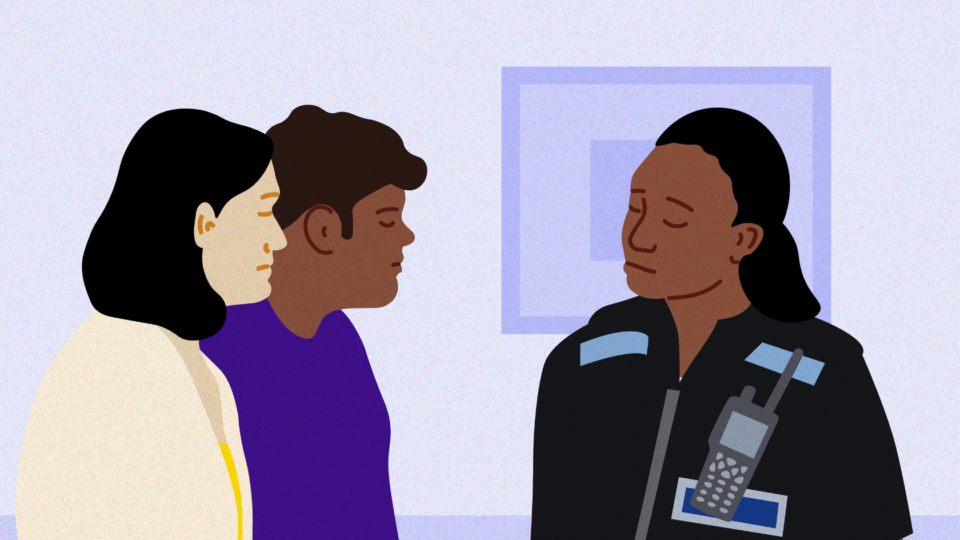
When I saw The Lullaby Trust’s newsletter about the new police training, I cried. ‘At last’, I thought. I’m so pleased it’s been taken on board. When Paul died, I had an awful experience with the police. I can still feel the police woman’s hand on my right shoulder. She said ‘It’s alright love, just tell me what you did.’ Those words have haunted me ever since.
SIDS is something you never ever get over, but one of the things that I still feel to this day is those words. They led to a cycle of self-blame for the rest of my life.
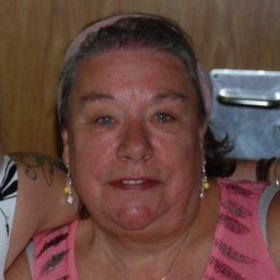
After getting in touch with The Lullaby Trust, we started a group in Hertfordshire to fundraise for them. We hosted fundraising events, including a sponsored swim. These events were so important to me to remember Paul, and to help everyone else remember him. I still support The Lullaby Trust to this day, buying Christmas cards from them.
Our training packages cover bereavement communication, how to support anyone affected by the death of a baby or young child, as well as understanding grief in a cultural context.
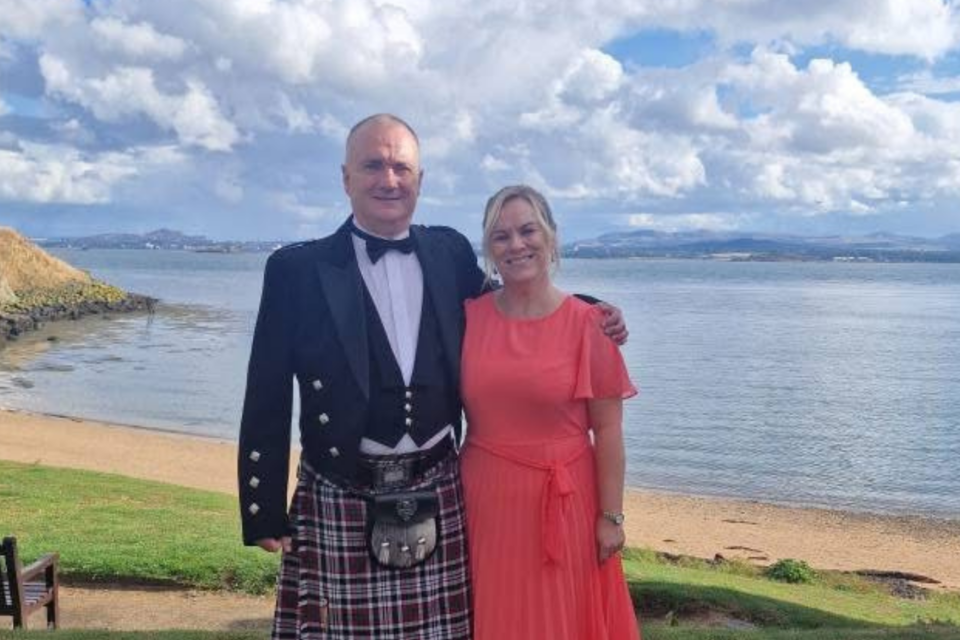
Fiona lives in Glenrothes in Fife. Fiona’s son, Grant, died suddenly and unexpectedly when he was 26 days old. She spoke to us about the impact this had on her and her family.
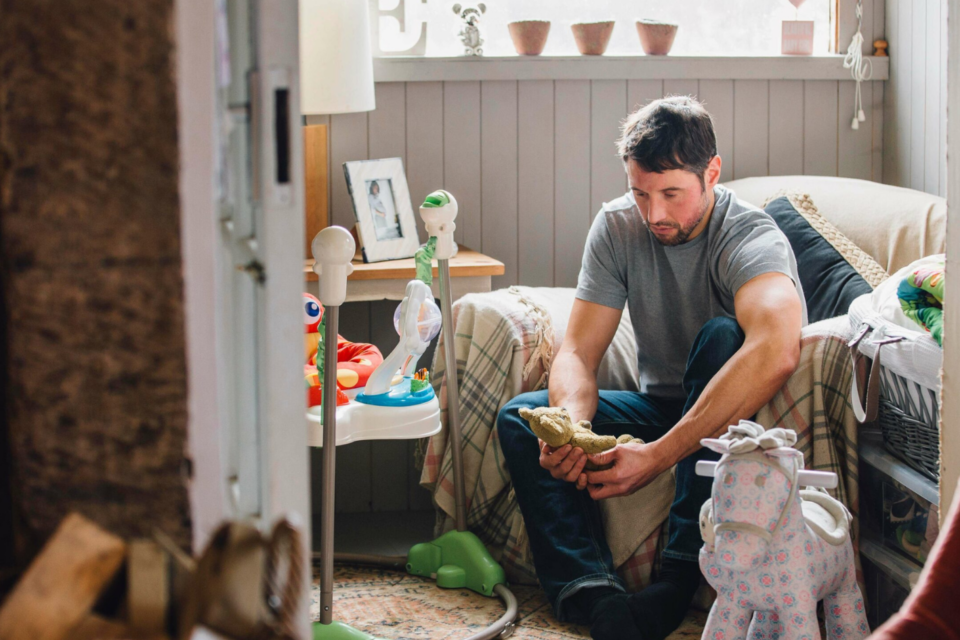
The sudden and unexpected death of a baby or young child can be deeply traumatic. There is no right or wrong way to respond, everyone’s experience is unique.
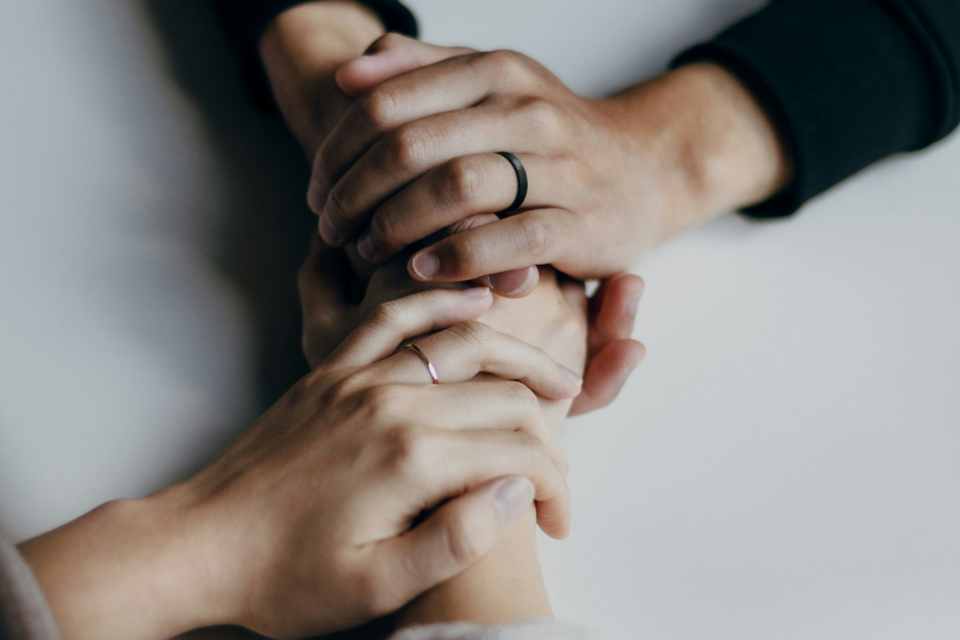
If you would like the opportunity to talk freely, for as long as required, with a sympathetic and understanding listener, please contact us via our bereavement helpline or send an email.
Donate today and your kindness will empower families with trusted and life-saving baby safety advice, as well as providing a supportive space for anyone who has experienced the the sudden or unexpected death of a baby or infant.