

Tips for coping with the trauma of sudden bereavement
What you might notice and what might help.

When a baby or young child dies suddenly and unexpectedly it is a tremendous shock that knocks us off balance and can change our beliefs about the world. It can be difficult to process what has happened and emotions feel very raw.
We can react without thinking; our brain does it for us, so that it happens automatically.
Any reminders of the event (for example hearing a siren) can turn on or trigger our trauma response again. Even if the event was in the past, we may feel as if we are back in that moment again.
You may have noticed that certain sounds, smells, places or people can trigger your trauma memories and reactivate your trauma response.
If you’d like to talk or need help finding additional support, we’re here to listen and guide you towards other services that may be beneficial. More information on trauma can be found here.
NHS talking therapies for anxiety and depression can help if you are experiencing signs and symptoms of Post Traumatic Stress Disorder (PTSD). More information on talking therapies and self-referring for therapy local to you, can be found here.
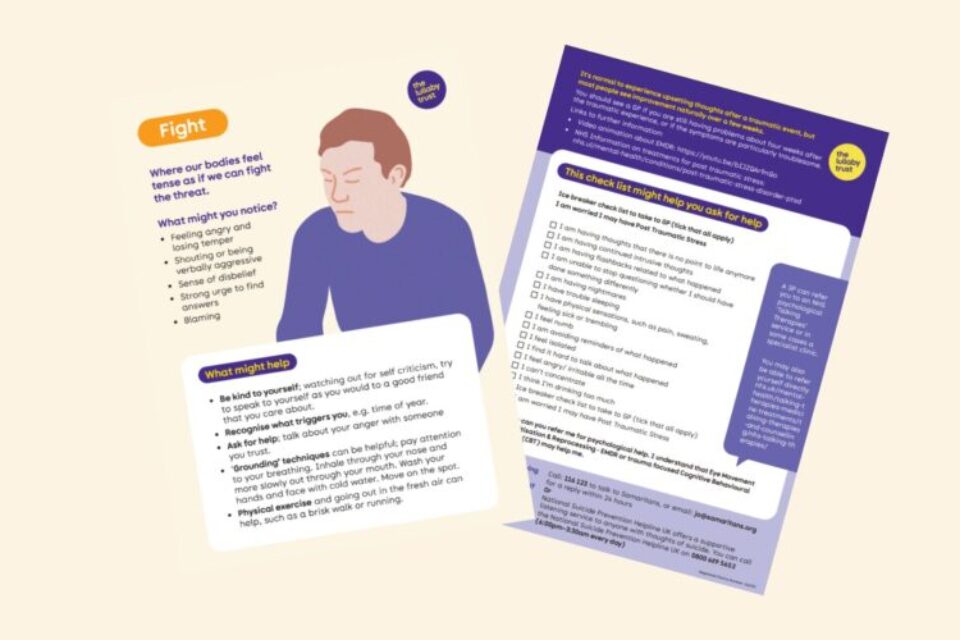
Our resource on tips for coping with the trauma of sudden bereavement might also be helpful. There is a useful icebreaker form on the back of the bottom of the booklet, which might help empower you to open the conversation with your GP.

Eye Movement Desensitisation and Reprocessing (EMDR) is a therapeutic approach designed to help people process traumatic experiences. It supports the brain in reorganising distressing memories, so they feel less overwhelming over time.

Trauma responses are human responses to an experience no one should ever have to face. We don’t put a time limit on support. We're here for you, whether you want to talk, ask questions, or explore additional help.

If you are having thoughts of harming yourself or feel you can’t go on, call: 116 123 to talk to Samaritans, or email: [email protected].
National Suicide Prevention Helpline UK offers a supportive listening service to anyone with thoughts of suicide. You can call the National Suicide Prevention Helpline UK on 0800 689 5652 (6:00pm–3:30am every day).
What you might notice and what might help.
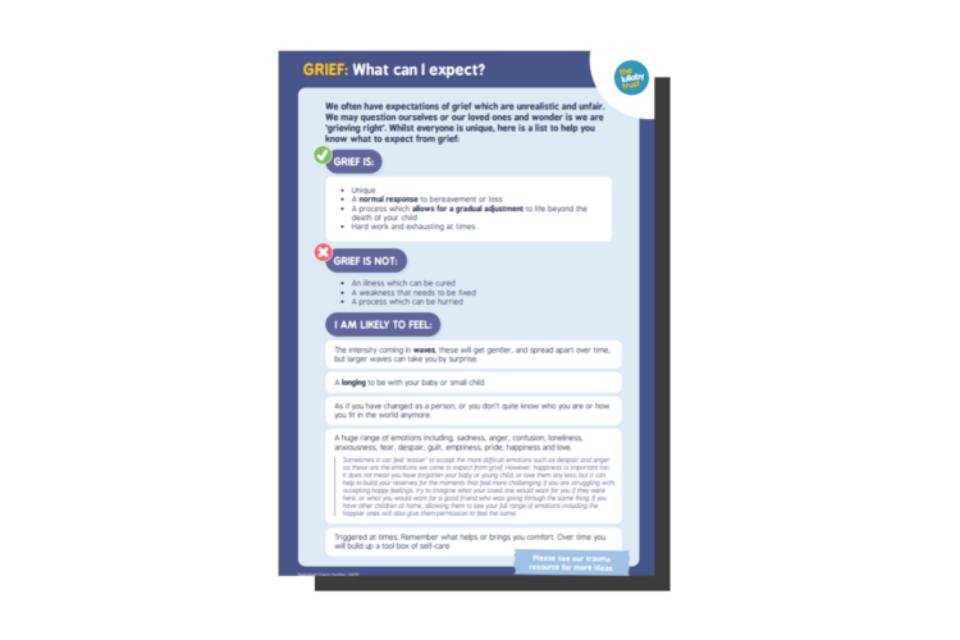
A guide for understanding and what to expect when grieving.

Bereavement counselling or therapeutic support can be helpful if you are finding things especially difficult or require more in-depth support.

We understand the impact a sudden infant death can have on a family and recommend the following media to try and help support families during this difficult time.